Small gardens are common across Edinburgh, particularly in areas such as Leith, Stockbridge, and Morningside. Whether you are working with a compact courtyard or a narrow outdoor space, thoughtful planning can transform even the smallest garden into a functional and visually balanced environment.
This guide explores practical and creative small garden design ideas that homeowners can use to improve layout, maximise space, and create a garden that feels connected to the home.

How Can You Make a Small Garden Feel Bigger?
One of the most common goals is to make a compact garden feel more open and usable. This can be achieved through a combination of layout, materials, and visual techniques.
Effective small garden ideas include:
- Creating clear zones rather than overcrowding the space
- Using consistent materials to avoid visual clutter
- Keeping pathways simple and direct
- Positioning features to guide movement through the garden
- Maintaining open sightlines from the house
A well-planned layout often makes a bigger impact than adding more features.
Why Is Layout the Most Important Starting Point?
The layout defines how the garden functions. In smaller spaces, even small changes can significantly improve usability.
When planning a garden layout for a small garden, consider:
Zoning the Space
Dividing the garden into functional areas such as seating, planting, and circulation helps create structure.
Movement and Flow
Clear pathways allow the garden to feel accessible rather than restricted.
Relationship to the House
Views from inside the home should guide where key features are placed.
A structured layout ensures that the garden feels intentional rather than crowded.
What Materials Work Best in Small Gardens?
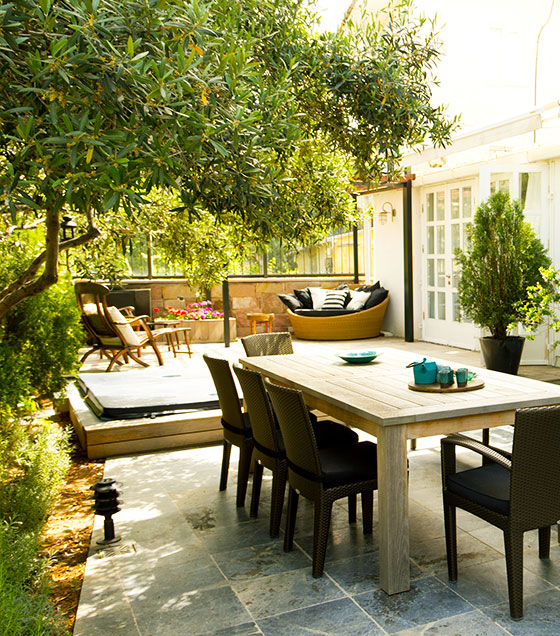
Material selection plays a major role in how spacious a garden feels. Too many materials can make a small garden appear fragmented.
For small garden landscaping ideas, a restrained palette is more effective.
Common choices include:
- Porcelain paving for a clean, contemporary look
- Natural stone for a softer, more traditional feel
- Timber elements to add warmth and contrast
- Gravel to create texture without adding visual weight
Keeping materials consistent across the space helps create cohesion.
For guidance on material durability and suitability, you can refer to the Royal Horticultural Society.
How Can Planting Improve a Small Garden?
Planting is essential for adding depth and softness, but it needs to be carefully considered in smaller spaces.
Effective planting ideas focus on structure rather than quantity.
Key strategies include:
- Using vertical planting to maximise space
- Repeating plant species to create rhythm
- Combining evergreen structure with seasonal interest
- Avoiding overly dense planting that restricts movement
Well-planned planting enhances the design without overwhelming the space.
Can Vertical Design Make a Difference?
Yes, vertical design is one of the most effective ways to increase usable space in a small garden.
Instead of focusing only on ground level, consider:
- Raised planters
- Wall-mounted planting
- Vertical screens for privacy
- Climbing plants to soften boundaries
These approaches are often used in urban garden design projects where space is limited.
How Does 3D Garden Design Help with Small Spaces?
Small gardens benefit significantly from visual planning. It can be difficult to understand how a layout will work without seeing it clearly.
Using 3D garden design, you can:
- Visualise the layout before construction
- Test different material options
- Adjust planting and spacing
- Refine the design before committing
This reduces uncertainty and helps ensure the final design works as intended.
You can learn more about this approach on our garden design services page.

What Should Homeowners Consider?
When designing a garden, there are practical factors that influence decisions beyond layout and aesthetics.
These include:
- Weather conditions and exposure
- Drainage and soil type
- Privacy from neighbouring properties
- Planning considerations for certain properties
Taking these factors into account ensures the design is both practical and sustainable.
What Mistakes Should You Avoid in Small Garden Design?
Avoiding common mistakes can significantly improve the outcome of a small garden project.
Common issues include:
- Overcrowding the space with too many features
- Using too many materials
- Ignoring the relationship between house and garden
- Poor circulation and movement
- Lack of structure in planting
A clear design process helps avoid these problems before construction begins.
Start Planning Your Small Garden Design in Edinburgh Today
A well-designed small garden can feel structured, functional, and visually balanced when the layout is carefully considered from the start.
Gardens & Projects is based in Musselburgh and works with homeowners across East Lothian to develop clear garden designs before construction begins.
If you are considering redesigning your outdoor space, you can get in touch to discuss your project and take the first step towards a more considered garden.